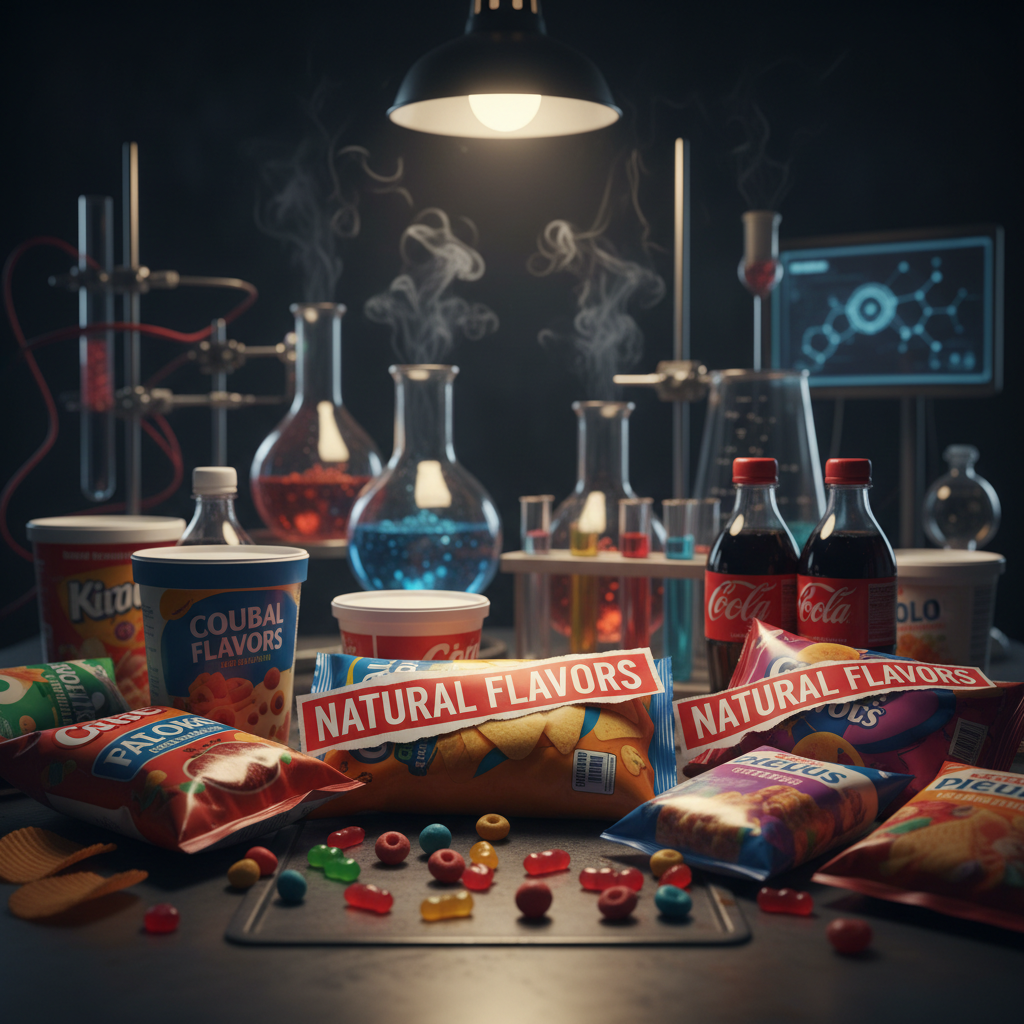
The Hidden Truth Behind "Natural Flavors" — What Food Companies Won't Tell You
If you've ever read a food label and seen "natural flavors" listed in the ingredients, you might have felt reassured. After all, the word 'natural' suggests something wholesome, plant-based, and safe. But the truth is far more complex—and troubling.
According to the FDA, 'natural flavors' are compounds derived from plant or animal sources that have been chemically processed and concentrated to create intense taste profiles. The operative word here is 'processed.' Despite the reassuring name, natural flavors are often synthetic, lab-created compounds that bear little resemblance to their original source.
Here's what makes it even more disturbing: A single 'natural flavor' ingredient can contain over 100 different chemical compounds. The FDA doesn't require manufacturers to disclose what these compounds are or how they're made. Companies can simply list them as 'natural flavors' and move on, leaving consumers completely in the dark.
The sources used to create natural flavors are shocking. A flavor chemist might extract compounds from beaver anal glands (castoreum is used in vanilla and raspberry flavoring), insects (carmine for red coloring), or fermented bacteria to create the 'natural' taste of caramel or vanilla. While these sources are technically 'natural,' they're treated with solvents, enzymes, and other chemicals that strip away their original identity.
Vanilla is a prime example. Natural vanilla flavoring rarely comes from vanilla beans. Instead, it's synthesized from wood pulp byproducts, petroleum derivatives, or castoreum. The FDA classifies all of these as 'natural' flavors because they're derived from natural sources, even though the processing makes them unrecognizable.
What's the difference between 'natural flavors' and 'artificial flavors'? Not much from a chemical perspective. Both are created in labs using similar processes. The difference is bureaucratic: artificial flavors are synthesized from non-natural sources (like petroleum), while natural flavors come from plant, animal, or microbial sources—but then are chemically altered beyond recognition.
This regulatory loophole allows corporations to create the impression of a wholesome product while actually using the same synthetic compounds as their competitors. It's pure marketing, backed by FDA regulations that prioritize corporate interests over consumer transparency.
The health implications are significant. Many natural flavoring compounds haven't been thoroughly studied for safety. Some contain diacetyl (linked to 'popcorn lung,' a serious respiratory disease), while others may contain neurotoxic compounds or endocrine disruptors. Because they're not fully disclosed, researchers struggle to link health problems to specific flavorings.
What can you do? Read labels carefully and look for products that specify 'vanilla bean' or 'real fruit flavor' rather than just 'natural flavors.' Better yet, cook from scratch using whole ingredients. The more processed a food is, the more likely it contains mystery 'natural flavors' you're unknowingly consuming.
The takeaway: 'Natural' doesn't mean safe, healthy, or transparent. It's a marketing term that exploits our assumptions and a regulatory failure that protects corporate interests. Until the FDA requires full disclosure of flavor compounds, consumers are flying blind.
Sources & Further Reading
This article is drawn from the following evidence-based organizations and journals. Tap any source to read the original research.
Disclaimer: This article is for educational purposes only. Consult with a healthcare provider before making significant dietary changes.